


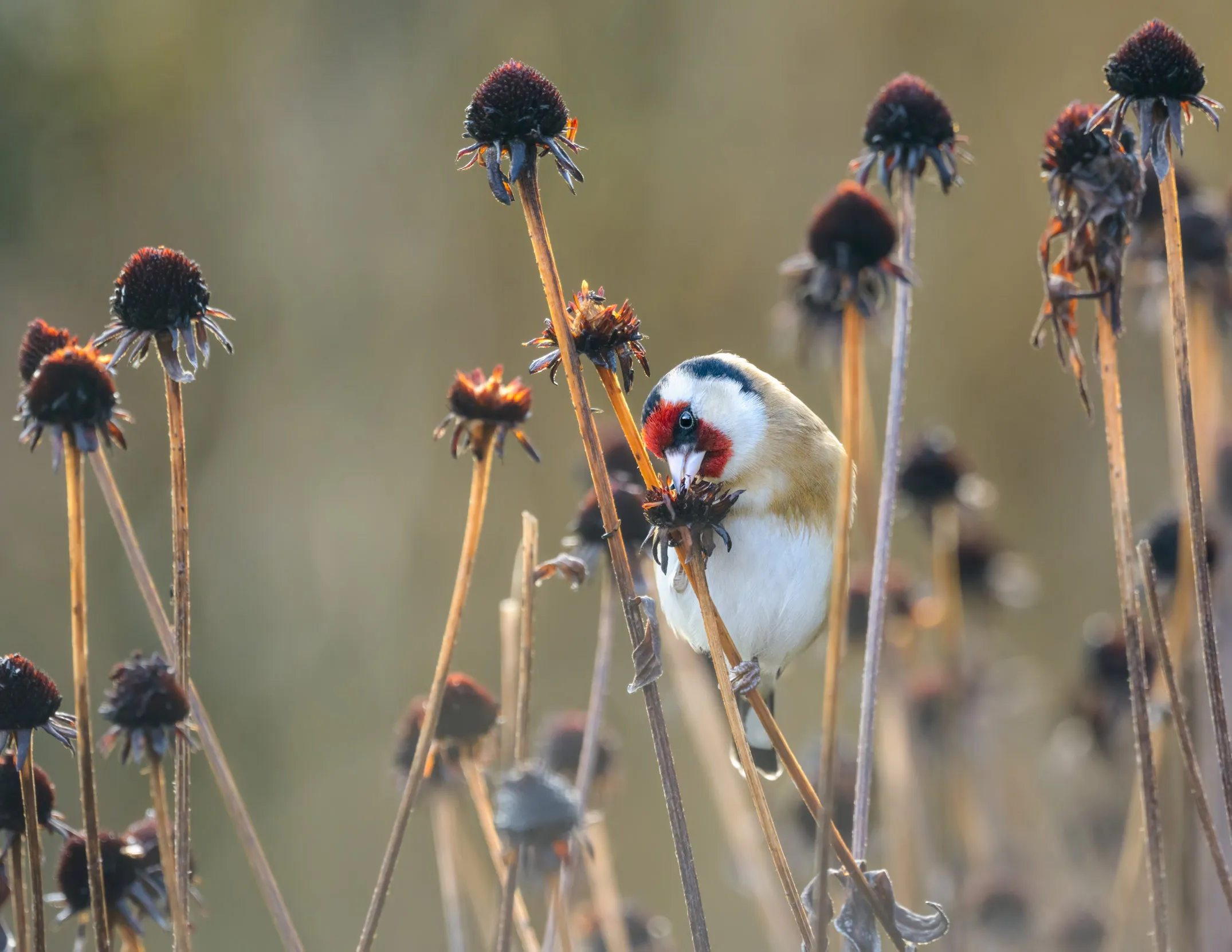
Autumn in the Highlands has a reputation for being the season of tidying up, cutting back, raking leaves, putting the garden “to bed” before winter sets in. But if you’re gardening with wildlife in mind, autumn is actually one of the most important seasons of the year. A few small changes to how you approach the autumn clear-up can turn a garden into a genuine haven for birds, insects, and small mammals through the coldest months, without sacrificing the tidy, considered look of a well-designed space.
Here’s how to plan an autumn garden that works as hard for local wildlife as it does for you.
1. Leave the seedheads standing
It’s tempting to cut every perennial back to the ground once the flowers fade, but resist the urge, at least until late winter. Sedums, echinacea, ornamental grasses, and teasels all produce seedheads that are a genuine food source for finches and other small birds through the leaner months. The hollow stems of many perennials also provide overwintering shelter for solitary bees and other beneficial insects. The design trick is selective restraint rather than total neglect: leave structural, architectural seedheads in place (grasses, alliums, sedums) while still cutting back anything that looks genuinely scruffy or diseased. A garden can look deliberately textured through winter rather than abandoned.
2. Create “wild corner” log piles and leaf litter
Every garden, however formal, benefits from one deliberately undesigned corner. A simple pile of logs and cut branches, tucked behind a hedge or in a shadier part of the plot, becomes valuable habitat for hedgehogs, beetles, and fungi over winter. Left-over autumn leaves piled loosely in the same spot add insulation and moisture, supporting the invertebrates that in turn feed birds and hedgehogs. Placement matters more than most people expect. Position wild corners out of the main sight-lines of the garden behind planting, along a boundary, or in an awkward spot that’s hard to plant formally anyway, so they read as intentional rather than untidy.
3. Plant native hedging for food and shelter
Autumn is prime planting season for bare-root native hedging, and it’s one of the best investments you can make for wildlife in an exposed Highland garden. Hawthorn, rowan, and blackthorn all provide berries that sustain birds well into winter, alongside strong autumn colour and valuable windbreak structure for gardens that catch the worst of Highland weather. Mixed native hedging also supports a far wider range of insect life than a single-species boundary, which has knock-on benefits for birds and pollinators through the following spring.
4. Plant bulbs now for pollinators next spring
Bulb planting is one of the most satisfying autumn jobs, and it’s worth planning with early pollinators in mind. Crocus, snowdrops, and winter aconite all flower before most garden plants have woken up, providing a crucial early nectar source for queen bumblebees emerging from hibernation. Planting generously in drifts through lawn edges or under deciduous trees. This gives far more benefit than a few scattered bulbs in a border.
5. Tend ponds and boggy areas with amphibians in mind
If your garden has a pond or a naturally boggy corner, autumn maintenance needs a lighter touch than you might think. Avoid a full clear-out of leaf litter and dying vegetation around pond margins, amphibians like frogs and newts often overwinter in the mud and debris at pond edges. Clearing it too thoroughly can remove exactly the shelter they need. A partial, careful tidy up, removing excess blanket weed but leaving marginal planting largely intact strikes the right balance.
Bringing it all together
None of this requires letting a garden go wild. The best wildlife-friendly gardens in the Highlands are still considered, structured, and beautiful to look at. They simply make room for a bit of purposeful untidiness alongside the design. Seedheads left standing, a hidden log pile, native hedging, and a lightly-tended pond edge can all sit comfortably within a well-designed garden, supporting everything from red squirrels to garden birds to the pollinators you’ll want back again come spring.
If you’re planning changes to your garden this autumn and want a design that balances structure with genuine ecological value, get in touch — I’d be glad to talk through what would work best for your plot.